Understanding Las Fallas
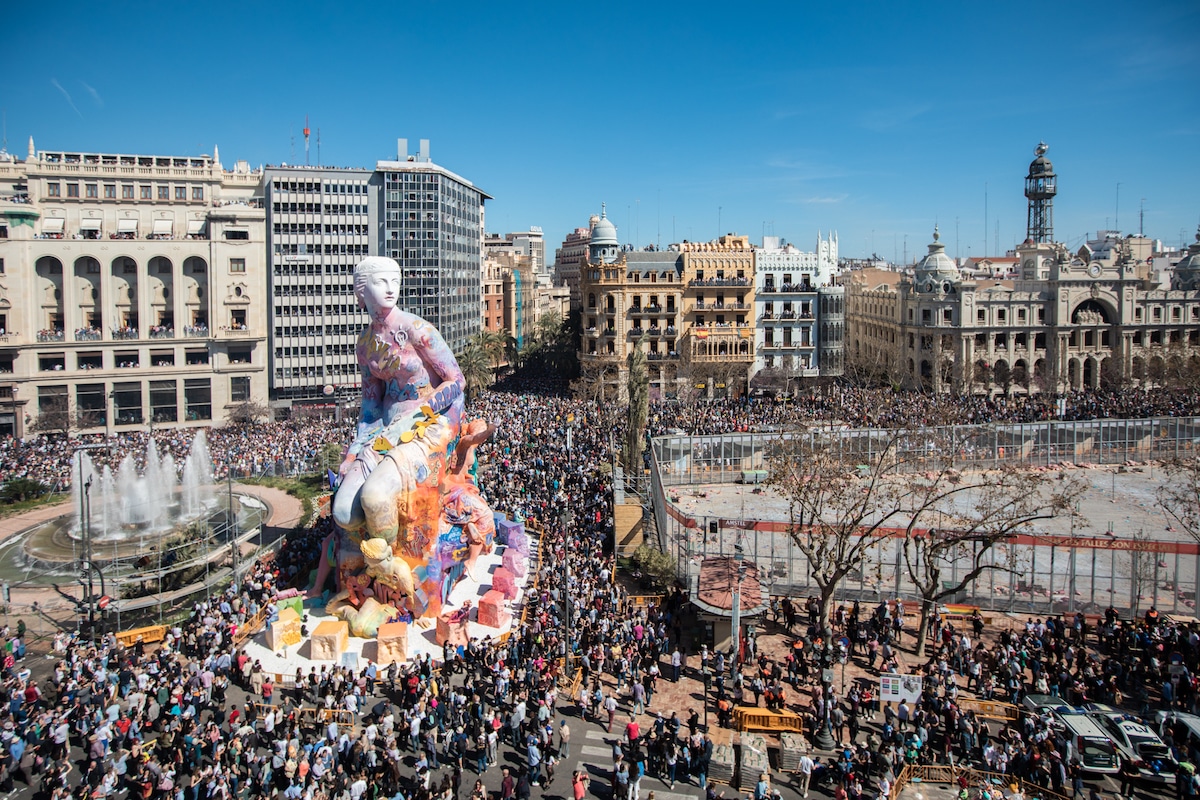
Las Fallas is Valencia's most spectacular festival, celebrated every March in honor of Saint Joseph. During this UNESCO-recognized cultural heritage event, over 700 elaborate artistic monuments called "fallas" are erected throughout the city, each representing months of artistic work and community effort.
The festival culminates in "La Cremà" (The Burning), where almost all monuments are set ablaze in a symbolic purification ritual. However, the most outstanding fallas in the "Sección Especial" (Special Section) represent the pinnacle of artistic achievement and draw hundreds of thousands of visitors.
The Challenge
With limited time and over 20 exceptional fallas spread across Valencia, visitors face a complex optimization problem: How to visit the maximum number of outstanding fallas in the shortest time possible?
Technical Approach
Problem Modeling
Formulated the challenge as a Traveling Salesman Problem (TSP) variant, considering real walking distances and time constraints between fallas locations.
Metaheuristic Algorithms
Applied advanced optimization techniques including Genetic Algorithms and Simulated Annealing to find near-optimal solutions for complex routing scenarios.
Data Analysis
Analyzed geographical data, walking distances, and time constraints to create practical, real-world applicable routing solutions.
Optimization Results
Our analysis produced three optimized routes tailored to different visitor preferences and time constraints. Each route was carefully designed using metaheuristic algorithms to minimize walking time while maximizing the cultural experience.
Route 1: Complete Experience
The comprehensive route visiting every falla in the Special Section, optimized to minimize total walking distance and time.
Route 2: Express Tour
A curated selection of the highest-rated monuments for visitors with limited time.
Route 3: Neighborhood Focus
Organized by neighborhood clusters, allowing visitors to explore specific areas of Valencia in depth.
Media Coverage
The project received widespread media attention from major Spanish news outlets, highlighting the intersection of academic research and cultural preservation.
Apunt Mèdia
"The perfect route to visit all Fallas d'Especial according to a scientific study"
Read ArticleEl País
"The perfect route to see the most outstanding Fallas in the shortest time possible according to an algorithm"
Read ArticleValencia Plaza
"UPV students trace perfect route to see Special Fallas in minimum time"
Read ArticleEuropa Press
"UPV students trace the perfect route to see Special Fallas in the shortest time possible"
Read ArticleTechnical Implementation
Programming Languages
Algorithms
Visualization
Project Significance
This project demonstrated the practical application of advanced optimization algorithms to real-world cultural challenges. By combining technical expertise with cultural understanding, we created a tool that helps thousands of visitors better experience Valencia's most important festival.
The widespread media coverage highlighted how academic research can directly benefit the community, bridging the gap between theoretical computer science and practical cultural applications.